
Smart money concepts, without the mystique
Smart money concepts describe how price tends to behave around resting stops. Stripped of the slogans, it is a sequence you can test: liquidity, sweep, shift, gap, entry.
What the idea claims
The premise is that large orders need liquidity, and that stops above highs and below lows are that liquidity. Much of the vocabulary spread through Michael Huddleston, known as the Inner Circle Trader (ICT).
Nobody can see who actually placed an order. “Smart money” is a story about price, not proof about participants. Treat it as a hypothesis to test, not as a fact.
The sequence, step by step
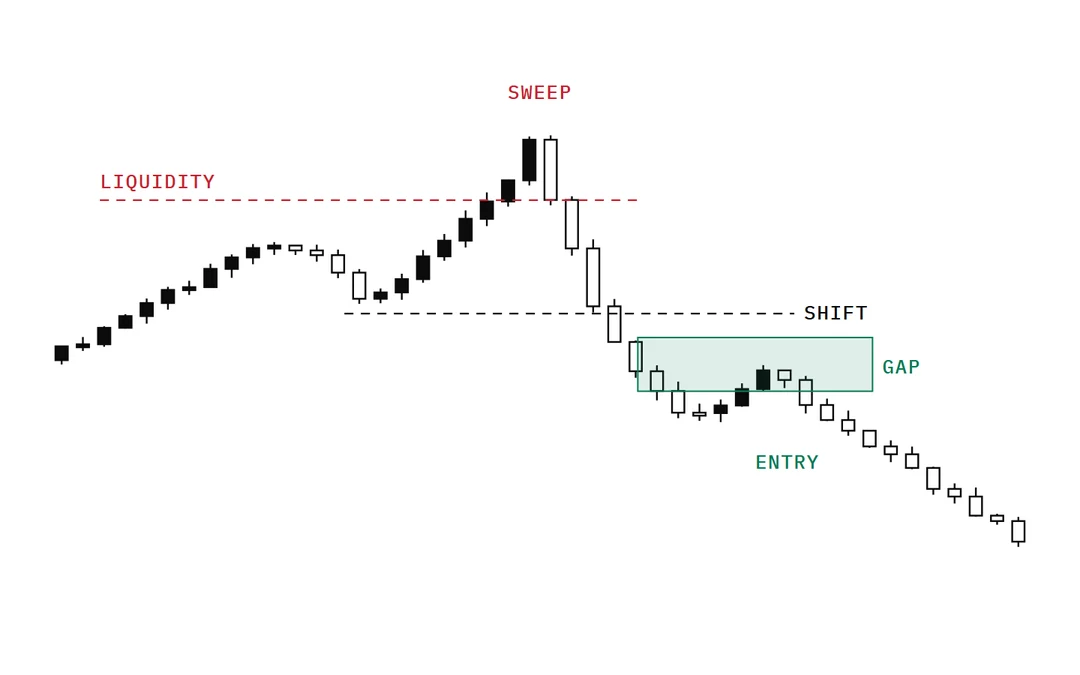
- Liquidity. Equal highs, equal lows and the prior day’s extremes: places where stops cluster.
- Sweep. Price trades through the level, triggers those orders and comes back inside.
- Shift. A strong move breaks the last swing in the other direction. That strength is called displacement.
- Gap. Displacement leaves a three-candle imbalance: the fair value gap (FVG).
- Entry. Price returns into the gap or a 62–79% retrace, with invalidation beyond the sweep.
Four common variations
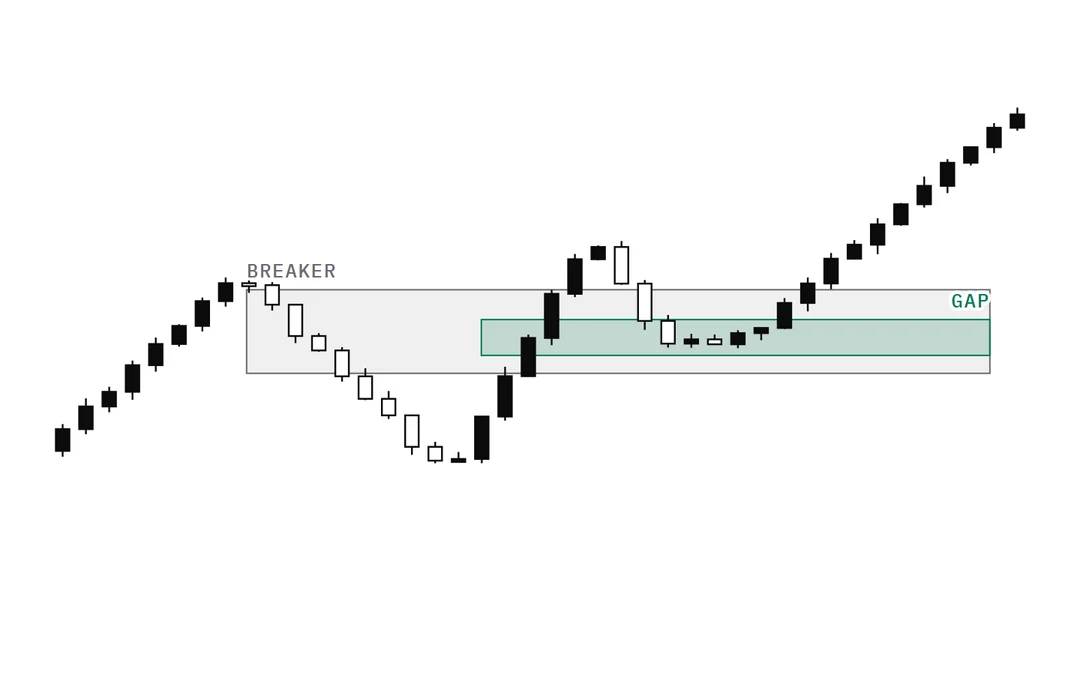
Breaker and gap
A breaker block and a gap overlap in one area, which narrows the zone to watch.
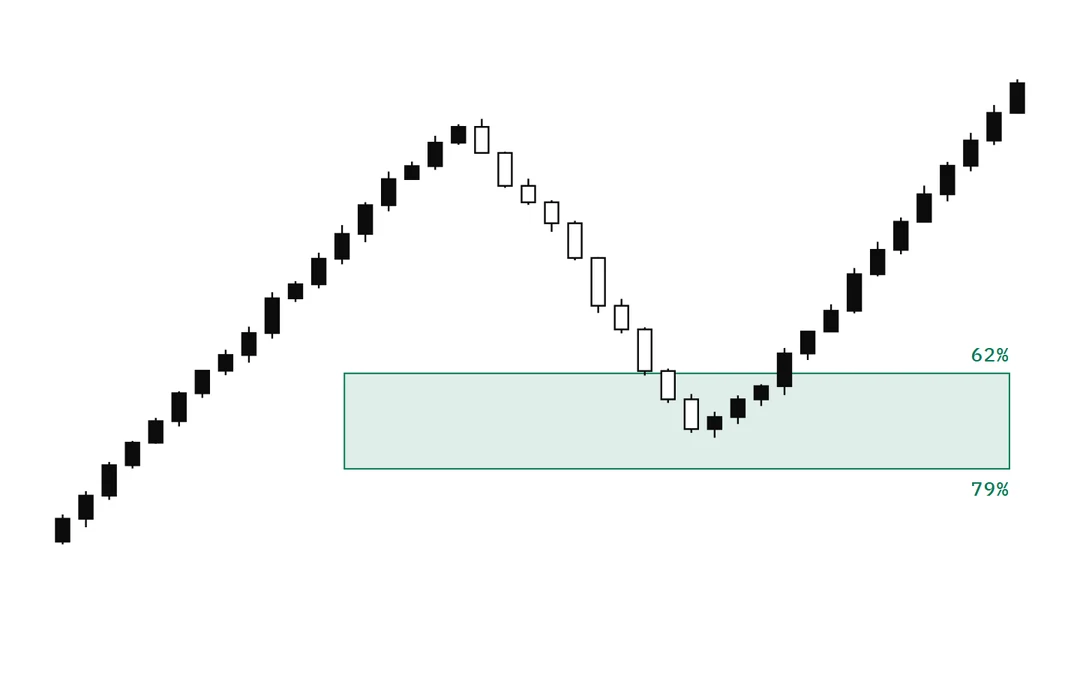
Deep retrace
The 62–79% zone of a displacement leg, often with a gap inside it.
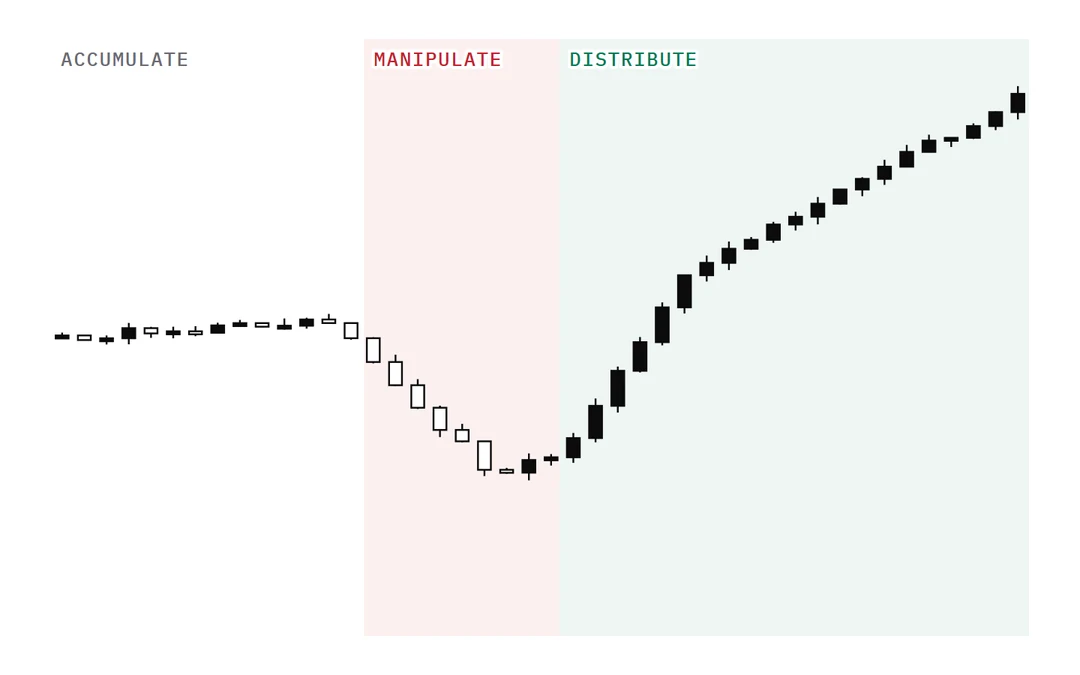
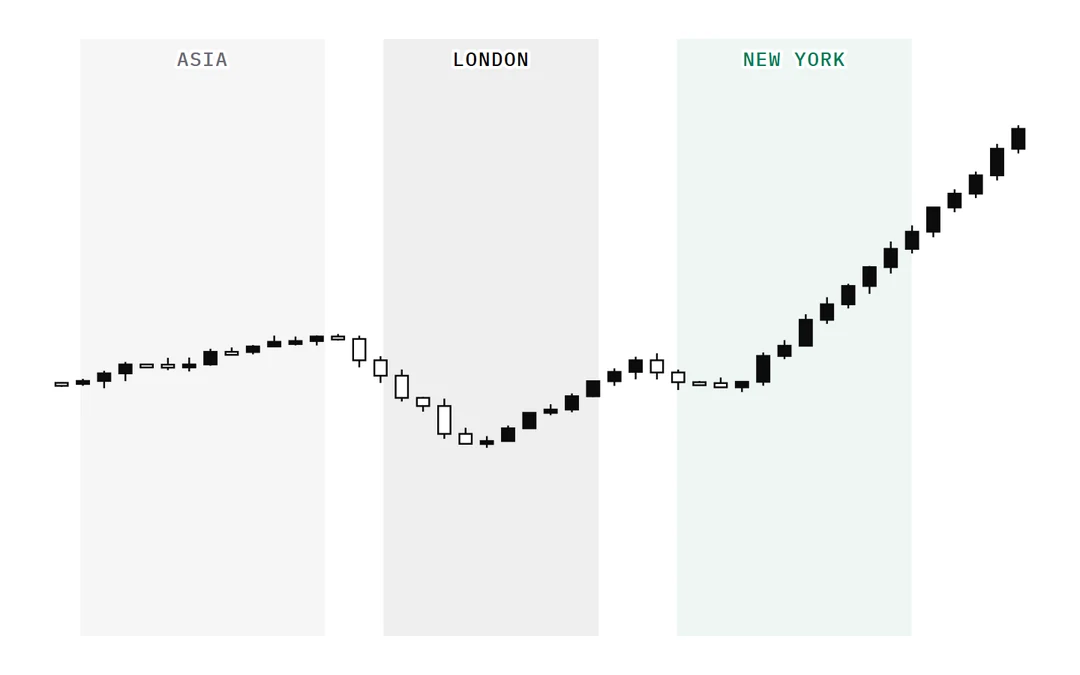
Three-phase day
Quiet accumulation, a manipulation against the trend, then distribution as the main move.
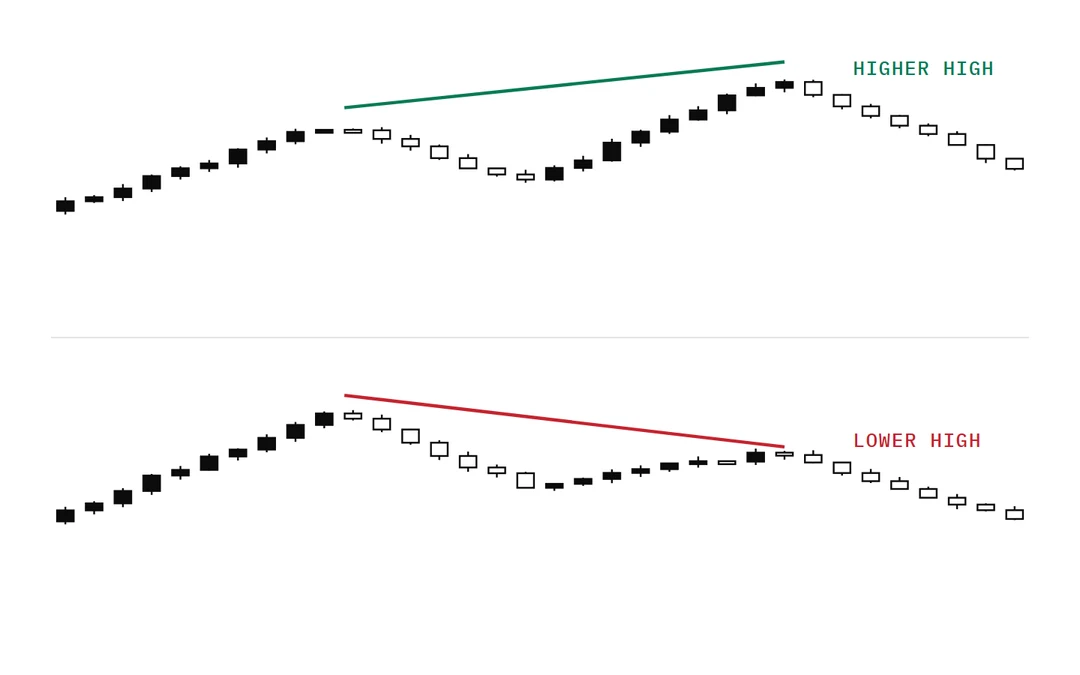
Twin market check
One market makes a new high and its linked market does not confirm it.
Why the clock matters
Liquidity is not spread evenly through the day. Followers of this method set windows in New York time around the London and New York opens and ignore the rest. Pick one window and stay with it.
The Liquidity Kit
| Sweep and ShiftICT 2022 | A stop run, a structure break, then the gap it leaves. |
|---|---|
| Market Maker CurveMMBM / MMSM | Stages down to a key level, then the mirrored return. |
| One-Hour WindowSilver Bullet | Fixed New York hours that frame a sweep and a gap. |
| Breaker and GapUnicorn | Where a breaker block overlaps a fair value gap. |
| Three-Phase DayPower of 3 | Accumulation, manipulation and distribution around New York midnight. |
| Deep RetraceOTE | The 62–79% retrace of a displacement leg. |
| Twin Market CheckSMT Divergence | Two linked markets that stop agreeing. |
| False BreakTurtle Soup | A raid on an obvious level that fails and snaps back. |
| Session MapKillzones & Daily Profiles | Session boxes, daily profiles and raids of the prior range. |
| Open TrapJudas Swing | The false move at the London and New York opens. |
A checklist before entry
- Higher-timeframe direction is set.
- The liquidity level was named before the session.
- The sweep happened inside my window.
- Displacement closed beyond the last swing.
- The gap is still unfilled.
- The stop sits beyond the sweep and the reward is clear.
- No major release is due.
Limits and risks
- Competing definitions. Traders define each concept differently, and these tools draw one reading with fixed rules.
- Hindsight. Patterns look obvious once complete, so test them in real time.
- No proof of institutions. A pattern does not show who is behind a move.
- Failure happens. A setup can fail however clean it looks, and past results do not indicate future ones.
- Leverage. A small move can mean a large loss. Read the risk disclaimer before trading real money.
Common questions
Is smart money the same as ICT?
ICT is the source many of these terms spread from. Smart money concepts (SMC) is the wider name traders use for them.
Do the tools trade for me?
No. The Liquidity Kit draws zones and stages and can raise alerts, but it sends no orders.
Does it work on gold and forex?
It runs on any instrument loaded in the platform, but it suits markets whose liquidity and windows you understand. Nothing guarantees results.
Are these tools affiliated with ICT?
No. They are independent tools that apply publicly discussed concepts, and they are neither affiliated with nor endorsed by the Inner Circle Trader.
Educational content, not investment advice. Futures trading involves a risk of loss that can exceed the initial investment.